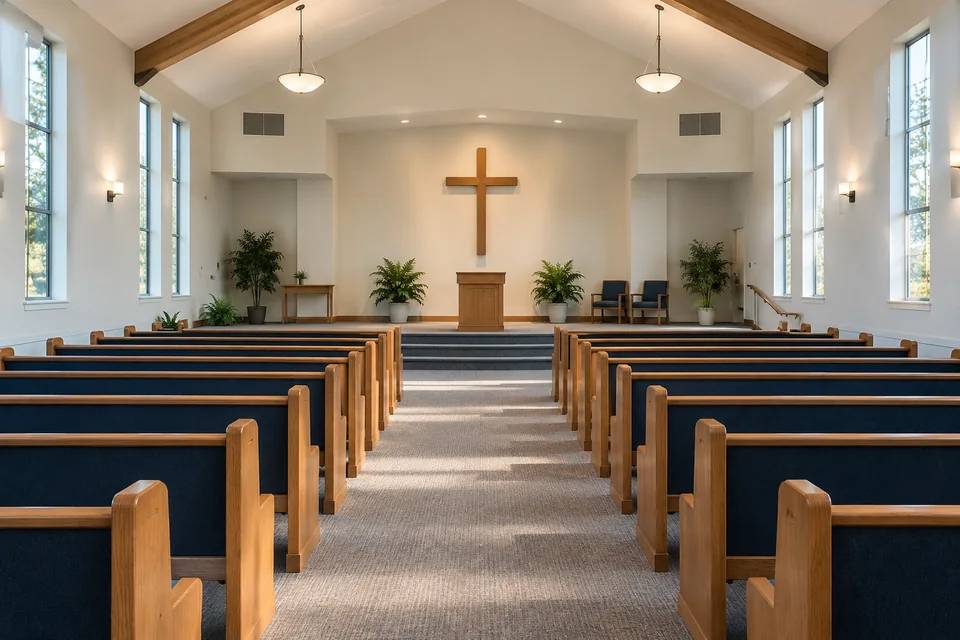
Start with the actual operating profile
Worship facilities often have intermittent occupancy, with gatherings, weekday programs and community rentals using different zones. A large building can have modest annual consumption yet sharp pre-event heating or cooling demand. Scheduling should match actual activities while maintaining safe building conditions.
Map electricity and gas separately
The electrical review should identify lighting, sound systems, kitchen equipment and cooling. For natural gas, establish whether the site uses space heating, kitchens and hot water where installed. Equipment fuel and meter ownership matter: a tenant may pay only part of the building’s utility cost.
For the cost review, keep energy cost per occupied event hour separate from a supplier energy rate. The operating metric includes the business’s activity and chosen cost boundary; the supply price measures a different part of the decision.
Translate operating plans into contract questions
Map services, rehearsals, childcare and rental events separately.
A tariff with demand billing may respond differently to simultaneous pre-event startup than a simple energy-only estimate.
Ask how the forecast and planned changes are handled in volume, assignment or closure terms before approving a contract.
Keep procurement and efficiency evidence separate
Review zoned scheduling and startup timing with the facility’s operator.
For internal monitoring, consider energy cost per occupied event hour. Use a consistent definition and compare similar periods. This operating metric is a management tool, not a universal benchmark or an ENERGY STAR score.
The verification record should connect the result to event calendar. Changes in that activity can explain a bill movement even when the supply price is unchanged.
Records for a useful review
Alongside twelve months of bills and the current agreement, prepare the records that explain churches & religious facilities operations:
- Event calendar.
- Rented spaces.
- Zoning controls.
- Caretaker schedule.
Hypothetical event-preparation demand case
Hypothetical: a worship facility records 8,000 kWh monthly and 100 kW of billed demand. An operating case retains the same kWh but assumes 80 kW of billed demand. At an invented $12 per kW charge, the single demand component changes from $1,200 to $960, a $240 modeled difference. This is not proof that changing startup times achieves the assumed reduction.
Compare actual intervals with services, childcare, rehearsals and rental events. Determine the tariff's demand window and any floor before pricing a revised schedule. Facility staff must preserve required conditions and event readiness. The board should see both the evidence for the assumed billed quantity and any operational consequences before approving an action.
Questions & answers
What should a churches & religious facilities business prepare first?
Start with the meter map, current contract and twelve months of bills, then add event calendar; rented spaces; zoning controls; caretaker schedule. Record planned changes rather than treating history as a promise of future usage.
Should the lowest unit price decide the contract?
A tariff with demand billing may respond differently to simultaneous pre-event startup than a simple energy-only estimate. Compare complete modeled cost, included components and flexibility before approving an agreement.
Apply this operating profile to your state
Confirm the service market before treating a supply offer as available. Electricity and gas have separate eligibility rules. Choose a state for a starting check, then use its full guide and the actual utility tariff.
Browse all state market guides
- Texas market guide
- Pennsylvania market guide
- Ohio market guide
- Illinois market guide
- New York market guide
- New Jersey market guide
- Massachusetts market guide
- Connecticut market guide
- Maryland market guide
- Maine market guide
- New Hampshire market guide
- Rhode Island market guide
- Delaware market guide
- Michigan market guide
- Virginia market guide
- Oregon market guide
- California market guide
- Washington D.C. market guide
- Georgia market guide
- Colorado market guide
Sources & scope
Primary references reviewed October 15, 2026. These sources support the stated concepts; actual tariffs, program rules and signed agreements govern the account. Decision examples and operational worksheets are original educational analysis.
- ENERGY STAR: technical resources for business energy management
Equipment and operational energy-management resources; site-specific decisions remain an engineering review. - EIA: electricity prices and factors affecting prices
Price components and variation; not an account-specific quote.